

The worst holiday I ever took covered six cities in twelve days. I can show you photographs of all of them and I could not tell you the name of a single street. Slow travel is the cure for that: fewer places, longer stays and the same street walked twice. It needs no sabbatical and no particular philosophy, only a few different decisions at the booking stage, and all of them fit into a normal fortnight's leave.
What it means in practice
Strip away the soft-focus photographs and slow travel comes down to three habits. You stay at least four nights in each place, and a week if you can. You move between places on the ground where that is reasonable. And you go back to things: the same market, the same bar, the same bench by the river.
The arithmetic is what persuaded me. Every move between bases costs about half a day once you count packing, checking out, the transfer, the queue, the journey and the wait for a room. My six-city holiday had five moves, so two and a half of my twelve days went on stations, airports and lobbies. Two bases in the same fortnight would have given me back two of them.
It also tends to cost less per day. Many short-let owners take roughly 10 to 25 per cent off for a week's stay, a kitchen means you are not paying for three meals out, and you stop buying expensive last-minute transfers. Don't expect miracles in high season, but on a two-week trip the savings usually cover a few good dinners.

How to begin: five small rules
- Four nights minimum. Two nights is a visit. On day three you know where the bakery is, and by day five you have opinions about it.
- One base a week. On a fortnight, two bases at most. On a week, one, with day trips by local train or bus.
- Choose a neighbourhood, not a city. Look for somewhere people live: a daily market, a school, a tram stop, a bar with old men in it. Try Campo de Ourique rather than Baixa in Lisbon, Bonfim rather than Ribeira in Porto, Testaccio rather than the streets around Termini in Rome. You will usually pay less and sleep better.
- Book a kitchen and a table. A flat with somewhere to sit near a window changes how a morning goes. Breakfast stops being an event you have to leave the building for.
- One plan a day. One museum, or one walk, or one lunch worth the bus ride. Anything more is a bonus.
What a day looks like
Mine tend to run the same way. Coffee at the same place, where by the third morning nobody has to ask. A walk to the market for tomatoes and whatever the stallholder insists on. The day's one plan, done before the heat or the coaches arrive. Lunch, then a long afternoon of reading, which feels scandalous for about two days. A walk at dusk, when residents come out and the street turns back into theirs.
Expect a wobble around day four, when you feel you ought to be doing more. Take a local train somewhere for the day, come back in the evening and notice that it felt like coming home. That is the moment it starts working.
By the fifth morning you stop looking at the map and start looking at the street.

Where to try it first
These all reward staying put, and all have good day trips by public transport. Costs are rough, per person per day for two sharing, at the time of writing, and leave out getting there.
| Where | Stay | Why it suits | Rough daily cost |
|---|---|---|---|
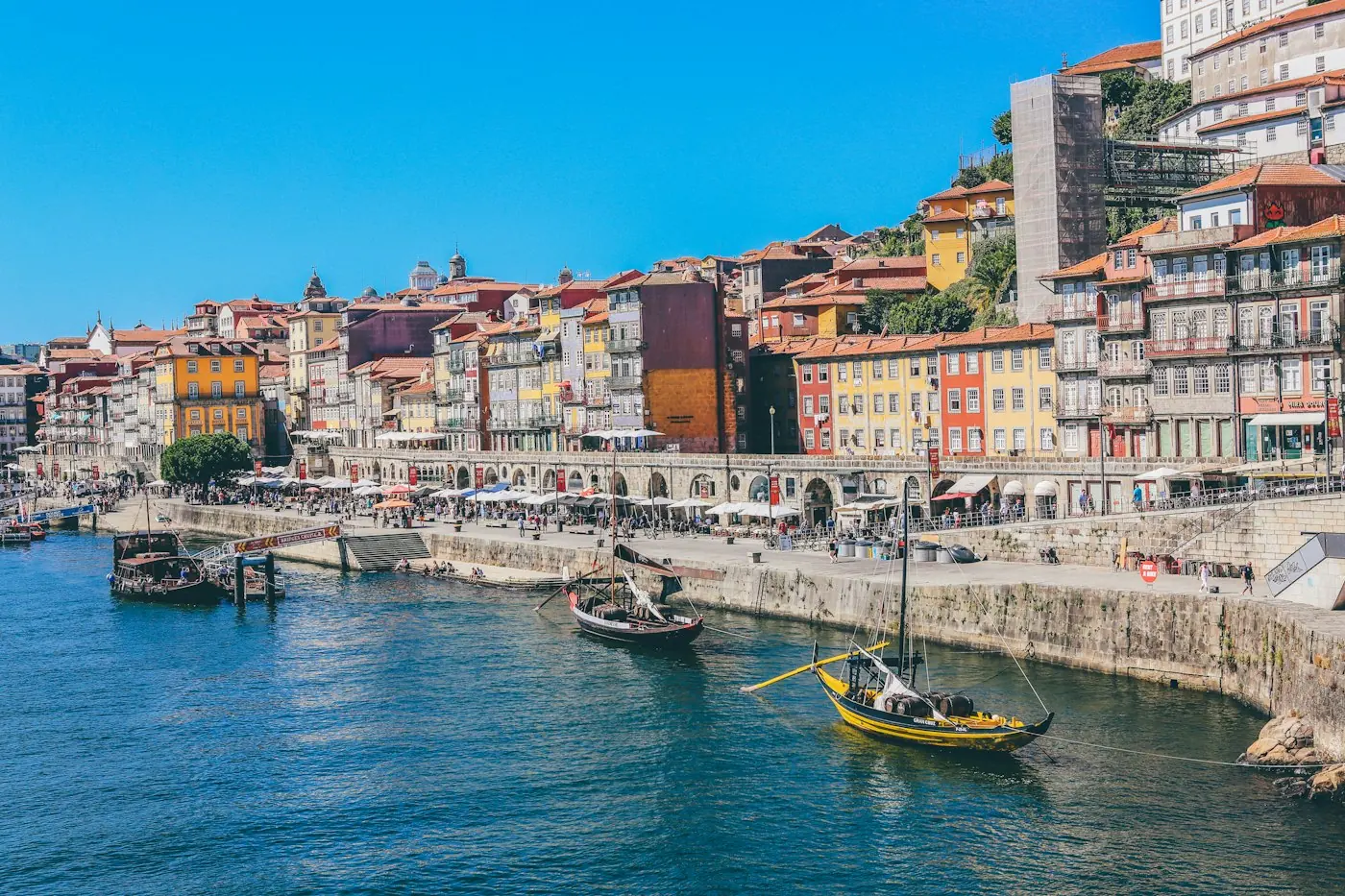
| Porto (Bonfim), Portugal | 7 nights | Residential streets, river walks and the train up the Douro valley to Pinhão, about two and a half hours | £70 to £100 |
| Bologna, Italy | 5 to 7 nights | Covered porticoes, food-market streets and regional trains to Modena and Ravenna | £80 to £110 |
| Ljubljana, Slovenia | 5 nights | Small enough to know by day two, with Lake Bled a little over an hour away by bus | £70 to £100 |
| Tbilisi, Georgia | 7 nights | Old-town walks, sulphur baths and a cheap minibus to Mtskheta | £40 to £70 |
| St Davids, Pembrokeshire | 7 nights | The coast path in short sections, with seasonal coastal buses to bring you back | £70 to £110 |
Getting there without rushing
Flying to your base is fine. The point is what you do after landing, and nobody should feel guilty about a two-hour flight that buys an extra day in Bologna. If trains appeal, though, they suit the idea well. From London you can reach Avignon or Marseille in roughly eight hours with a change on the way, and the journey becomes part of the trip rather than a gap in it. Book as early as you can, because the fares climb steeply.
Once you arrive, ask about a weekly transport pass or a rechargeable transport card, which usually beats paying per ride. And if you want a whole route built on rail, our week in Portugal without a car links three regions by train. Double each stay and you have a very pleasant fortnight.
What to skip, and the honest drawbacks
Skip the hop-on bus, the day-long coach tour that returns you at seven unable to speak, and any list with the word "ultimate" in it. Skip the third base in the fortnight, however cheap the flight looks.
There are real downsides. You will see less, and someone at home will ask whether you saw the thing you did not see, so do the one famous sight early in the stay and get it off your conscience. You will do laundry on holiday. A bad base is harder to escape, so check where the flat sits, read the reviews that mention noise and, on a first attempt, book three nights with the option to extend if the owner allows it.
Not everyone enjoys it, either. If your travel companion needs a new horizon every morning, agree a compromise before you go rather than on day three.
Small habits that take you deeper
- Learn ten phrases, including the numbers. Being able to ask for half a kilo of something gets you further than a fluent "where is the station".
- Take one class. A morning of cooking or language lessons costs roughly £30 to £60 and gives you someone to say hello to afterwards.
- Go to something that isn't for you. A lower-league football match, an evening concert in a parish church, the local swimming pool, a haircut.
- Walk the same route at different hours. A street at 7am and the same street at 9pm are two different places.
- Keep a paper notebook. Write down the street names. In ten years it will tell you more than the photographs will.
Keeping something steady helps too: a small morning routine gives even a long stay some shape, and walking a city without navigation is the natural next step once you know your own few streets. Less luggage makes all of it easier, so run your bag past the packing checklist before you go. A week in one place needs no more clothes than a week in six.
Comments
No comments yet. Yours could be the first.
Leave your comment
Your email address will not be published. Comments appear after moderation. All fields are required.